
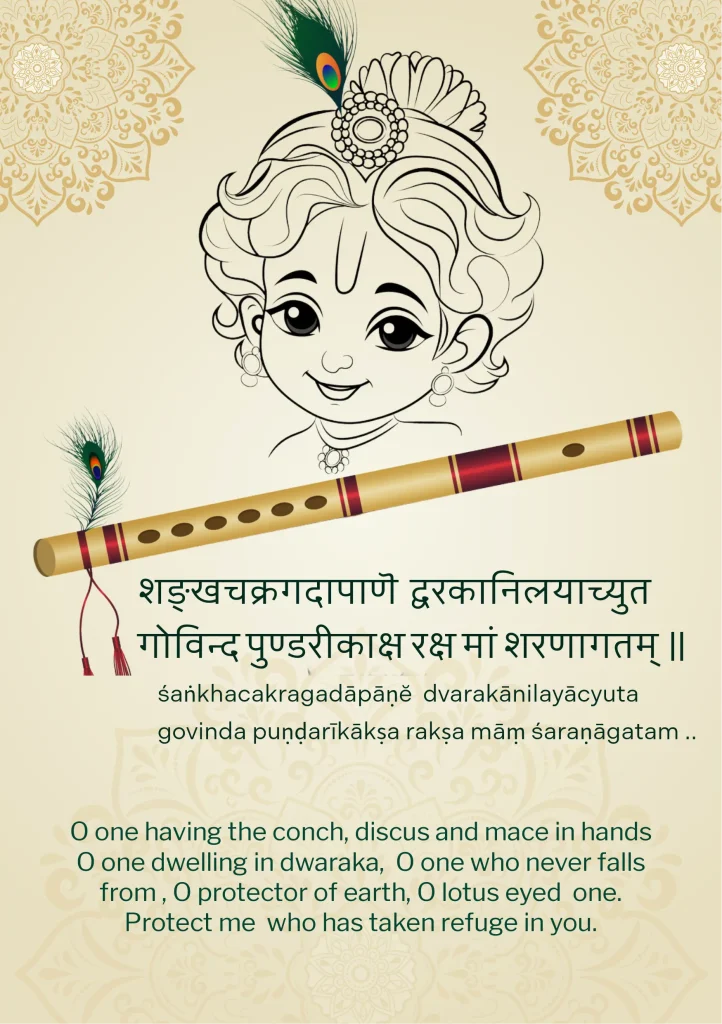
शङ्खचक्रगदापाणे द्वारकानिलयाच्युत
गोविन्द पुण्डरीकाक्ष रक्ष मां शरणागतं(तां)
śaṅkhacakragadāpāṇe dvārakānilayācyuta
govinda puṇḍarīkākṣa rakṣa māṃ śaraṇāgataṃ(tāṃ)
शङ्खचक्रगदापाणे (śaṅkhacakragadāpāṇe) – शङ्खादयायुधधारित्वेन स विष्णुरेवेति सूचयति सा
śaṅkhādayāyudhadhāritvena sa viṣṇureveti sūcayati sā
By calling him O one who holds, conch, discus, and mace, she shows that she knows his true nature. She understands that he is Vishnu. These were the symbols that was shown to Vasudeva and Devaki when Krishna manifested as a child.
द्वारकानिलय (dvārakānilaya) – जरासन्धादिशत्रुश्रान्तान् जनान् द्वारकानिर्माणेन रक्षितवन्तं कृष्णं स्मरति
jarāsandhādiśatruśrāntān janān dvārakānirmāṇena rakṣitavantaṃ kṛṣṇaṃ smarati
By calling him O resident of dvāraka city she remembers who Krishna saved all the citizens of Mathura from the distress of continuous battles caused by jarāsandha and other enemy allies by building an entire city between the sea and moving them all effortlessly with yogic powers. So saving her from the kauravas is no big deal to Lord Krishna who can save millions of people instantaneously.
नवद्वारवत्यां देहापुर्यां अन्तार्यामित्वेन साक्षित्वेन च विद्यमानो वा द्वारकानियलः
navadvāravatyāṃ dehāpuryāṃ antāryāmitvena sākṣitvena ca vidyamāno vā dvārakāniyalaḥ
Some, while explaining say that she called him द्वारकानिलय (dvārakānilaya) and then she called him विश्वात्मन्! विश्वभावन! (viśvātman! viśvabhāvana!) But the very word dvārakā also gives the meaning the city with nine entrances, the body and the dweller and the in-dwelling eternal witness of each body as क्षेत्रज्ञ (kṣetrajña) is dvārakāniyalaḥ
द्वारवती देहो देहभावो निलीयते निलीयते अस्मिन्निति वा
dvāravatī deho dehabhāvo nilīyate nilīyate asminniti vā
In the experience of whom the false identification with body completely gets destroyed.
By remembering him with this epithet she withstands the physical harm and humiliation she is going though.
अच्युत (acyuta) – च्युतिरहित
स्वरूपसामर्थ्यान्नच्युतो न च्यवते न च्यविष्यते इति अच्युतः
svarūpasāmarthyānnacyuto na cyavate na cyaviṣyate iti acyutaḥ
He who was never moved away from or get deviated from nor does deviate from his true nature and is not shaken from his efficiency and skill nor will he be ever shaken from it and hence he is Acyuta.
शाश्वतं शिवमच्युतं इति श्रुतेः
śāśvataṃ śivamacyutaṃ iti śruteḥ
He is eternal, auspicious and is never shaken says the Vedas.
यस्मान्नच्युतपूर्वोऽहमच्युतस्तेन कर्मणा इति
yasmānnacyutapūrvo’hamacyutastena karmaṇā iti
I have never failed or deviated from my true nature or shaken from my aim and hence I am called acyuta because of that.
अवतारे सत्यपि सर्वशक्तत्वादिसामर्थ्ययुक्तः
avatāre satyapi sarvaśaktatvādisāmarthyayuktaḥ
By calling him achyuta, draupadi reminds herself that he never falls from his true nature hence he is all powerful, almighty, even when he has incarnated in a human form.
गोविन्द (govinda) – गाः उपनिषद्वाचः विन्दति, गां भुवं धेनुं स्वर्गं वेदं वा विन्दति । गाः स्तुतिगिरः विन्दति वा ।
gāḥ upaniṣadvācaḥ vindati, gāṃ bhuvaṃ dhenuṃ svargaṃ vedaṃ vā vindati . gāḥ stutigiraḥ vindati vā .
The word go means the statements of the Upanishads,he who is known through them and he who knows them in its complete essence is govinda. He who finds, reaches the earth (when abducted by hiranyaksha or submerged in the oceans of dissolution) he who reaches and acquires svarga again, he who is reached through the vedas, he who found the vedas when they were stolen by demons.
गोभिर्वाणीभिर्वेदान्तवाक्यैर्विद्यते योऽसौ पुरुष-विदन्ति यं पुरुषं तत्त्वज्ञा इति वा ।
यथा, विष्णुतिलके ।“गोभिरेव यतो वेद्यो गोविन्दः समुदाहृतः ॥
gobhirvāṇībhirvedāntavākyairvidyate yo’sau puruṣa-vidanti yaṃ puruṣaṃ tattvajñā iti vā .
yathā, viṣṇutilake .“gobhireva yato vedyo govindaḥ samudāhṛtaḥ ..
One who is known through go. Here the word go means speech, which speech? The commentator says the speech referred to here is the statements of Vedanta. That purusha – the universal consciousness embodied is govinda.
Supreme Being who the realized beings know is govinda.
गां वेदलक्षणां वाणीं गोभूम्यादिकं वा वेत्तीति ।यथा, गोपालतापन्यां पूर्व्वविभागे ध्यानप्रक-रणे । ७–८ । गोभूमिवेदविदितो
gāṃ vedalakṣaṇāṃ vāṇīṃ gobhūmyādikaṃ vā vettīti .yathā, gopālatāpanyāṃ pūrvvavibhāge dhyānapraka-raṇe . 7–8 .
gobhūmivedavidito
He who knows the words of the veda, he who knows the nature of earth, cow, etc. as told in the first part of gopālatāpany in the verses of contemplation. That he is known through Vedas, earth and cows, senses etc. and he who knows them completely.
गां विन्दता भगवता गोविन्देनामितौजसा ।
वराहरूपिणा चान्तर्विक्षोभितजलाविलम् ॥
gāṃ vindatā bhagavatā govindenāmitaujasā .
varāharūpiṇā cāntarvikṣobhitajalāvilam ..
By the lord of limitless prowess, who was searching for earth, in the form of the divine boar, the water inside was agitated and disturbed
युगेयुगे प्रणष्टां गां विष्णो ! विन्दसि तत्त्वतः ।
गोविन्देति ततो नाम्ना प्रोच्यसे ऋषिभिस्तथा
yugeyuge praṇaṣṭāṃ gāṃ viṣṇo ! vindasi tattvataḥ .
govindeti tato nāmnā procyase ṛṣibhistathā
O Vishnu in every era, you protect the earth, the and the vedas, hence you are called govinda by the seers.
विन्दतीति विन्दः पालकः स्वामी वा
vindatīti vindaḥ pālakaḥ svāmī vā
The protector and master of go. As we already discussed, go means veda, earth, sense organs, the statements of the Upanishads etc.
गवां शास्त्रमयीनां वाणीनां विन्दः पतिः ।
gavāṃ śāstramayīnāṃ vāṇīnāṃ vindaḥ patiḥ .
The lord of the words of sacred scriptures such as Vedas, puranas, Upanishads, smrutis etc.
गाः मनः-प्रधानानीन्द्रियाणि तेषां विन्दः प्रवर्त्तयिताचेतयिता वा । अन्तर्यामी आत्मेत्यर्थः
gāḥ manaḥ-pradhānānīndriyāṇi teṣāṃ vindaḥ pravarttayitācetayitā vā . antaryāmī ātmetyarthaḥ
gāḥ means mind and the five senses, vindaḥ is one who impels them to work and function, he who makes them active as the in dwelling controller, or the self (atman)
विष्णौ वराह-रूपेण भुव ऐश्वर्य्यप्राप्तेः इन्द्रेण स्वर्गस्य निवेदनात् मत्स्य-रूपेण वेदस्योद्धारणात्
viṣṇau varāha-rūpeṇa bhuva aiśvaryyaprāpteḥ indreṇa svargasya nivedanāt matsya-rūpeṇa vedasyoddhāraṇāt
govinda refers to Vishnu in the form of varāha as he found the earth, as matsya who uplifted the Vedas.
गोविन्दो वेदनाद्भवान्
govindo vedanādbhavān
पुण्डरीकाक्ष (puṇḍarīkākṣa) – तस्य यथा कप्यासं पुण्डरीकमेवमक्षिणी
tasya yathā kapyāsaṃ puṇḍarīkamevamakṣiṇī
he who has fully bloomed lotus like eyes.
हृदयस्थ पुण्डरीकमश्नुते व्याप्नोति तत्रोपलभ्यते इति
hṛdayastha puṇḍarīkamaśnute vyāpnoti tatropalabhyate iti
He who pervades the lotus hearts of the beings and he who is obtainable there.
पुण्डरीकं परं धाम नित्यमक्षरमव्ययम् इत्यहिर्बुध्न्यात् तद्भावात् पुण्डरीकाक्षः
puṇḍarīkaṃ paraṃ dhāma nityamakṣaramavyayam ityahirbudhnyāt tadbhāvāt puṇḍarīkākṣaḥ
रक्ष (rakṣa) – protect
मां (māṃ) – me
शरणागतं – शरणमागतः प्राप्तः तं
śaraṇamāgataḥ prāptaḥ taṃ
One who has sought refuge (in the supreme god)
This is the ultimate reason why the supreme lord must rescue and protect. This emphasizes that other qualities doesn’t matter. This answers the question why the supreme lord must protect me. As I seek protection from him.
The very realization that he is our asylum is enough for the being to deserve protection. Here understanding that he is our protector, doesn’t only mean we understand that only he can guard us but we also understand that we are his property. We are completely his one. Hence the responsibility to protect us becomes his own as we totally surrender to him.
The five names define why he is the saviour, and the word śaraṇāgataṃ establishes why the soul – the jeeva should be protected the word
When the being says rakṣa māṃ śaraṇāgataṃ, the being accepts the ever existing relationship with the lord, and this remains as the only identity of the being. I am his to rescue